

Trends
Emerging themes driving global conversations around growth opportunities, trade, wealth and technology
-
Embracing technology

Treasury moving from AI curiosity to AI capability
72% of Asia-Pacific treasurers believe AI will be extremely or very useful in three years’ time, but 20% still haven’t adopted any AI tools for treasury at all.
"As treasury teams get more comfortable with AI, they should move beyond using it as a basic search tool and learn how to apply it to more complex tasks,” our experts say in Voices of Treasury.
Explore more findings from Redefining Treasury Asia Pacific: Voices of Treasury 2026 (opens in new window) to find out how treasury is transforming.
1 of 4 -
Growth opportunities

AI tools are boosting consumers’ spending power
The free nature of many personal AI tools is generating a US consumer surplus that could reach $250 billion in 2027, our calculations suggest, equating to 0.8% of GDP or 1.5% of consumer spending.
“Savings from paid-for services that become replaced by AI could be funnelled into non-AI affected spending, such as clothing, entertainment and eating out.”
James Pomeroy, Global Economist, HSBC
Explore more findings from HSBC Global Investment Research’s report: Breaking the data – The billions of AI consumer surplus (opens in new window).
1 of 4 -
Wealth

The rising power of the 'silver dollar'
As populations across the world get older and wealthier, the real spending power of the over-65s is set to rise by 4-5% per year, compared with closer to 1% for other adults*.
*HSBC estimates
“While older populations have ‘outperformed’ in terms of spending in recent years, the coming decade points to an even bigger role for the so-called silver dollar.”
James Pomeroy, Global Economist, HSBC
Explore more findings in Global Investment Research's report: Breaking the data: Why ageing populations may prop up consumer spending (opens in new window).
1 of 4 -
Embracing technology

AI reshaping Asia-Pacific’s competitive landscape
Across Asia-Pacific, markets are diverging as each economy leans into its structural advantage. Public and private investment velocity is accelerating. Exit liquidity is shifting West to East.
In the first half of 2026, mainland China accounted for about 75% of Asia and Middle East AI venture funding, driven by a resurgence in large-scale AI investment.
Explore more about how Asia-Pacific’s strategic landscape is building towards self-reliance in the AI age, in HSBC Innovation Banking’s report, Innovation Horizons: Asia-Pacific (opens in new window).
1 of 4 -
Growth opportunities

The forces reshaping global payments
The global e-commerce market size is expected to grow at a compound annual rate of 22% from 2026 to 2033, reaching $156 trillion.*
*According to E-commerce Market Size and Share Report (2026- 2033)
“Payments are evolving at pace and the forces reshaping them – digital commerce at scale, richer data, AI, and modernised infrastructure – are raising the bar for what businesses expect.”
Manish Kohli, Head of Global Payments Solutions, HSBC
Read our report Global Payment Trends 2026 (opens in new window) on how payments priorities are shaping modern treasury, and what organisations can do to leverage these structural shifts.
1 of 4 -
Wealth

There’s a generational divide in investing
“Diversification is becoming mainstream. Younger investors invest more globally; older investors prioritise preservation and stable income.”
Lavanya Chari, Head of Wealth and Premier Solutions, HSBC
Gen Z investors, on average, invest in more products (4.4 vs 3.7) and more internationally (49% vs 43% preference for investing outside home market) than Baby Boomers.
Explore more findings and find out how people are navigating investment and wealth decision-making in our Global Affluent Investor Snapshot 2026 (opens in new window) report.
1 of 4 -
Embracing technology
Asia’s at the centre of climate tech revolution
“China’s showing incredible capability around battery technology, solar, wind, transmission.”
Julian Wentzel, Group Chief Sustainability Officer, HSBC
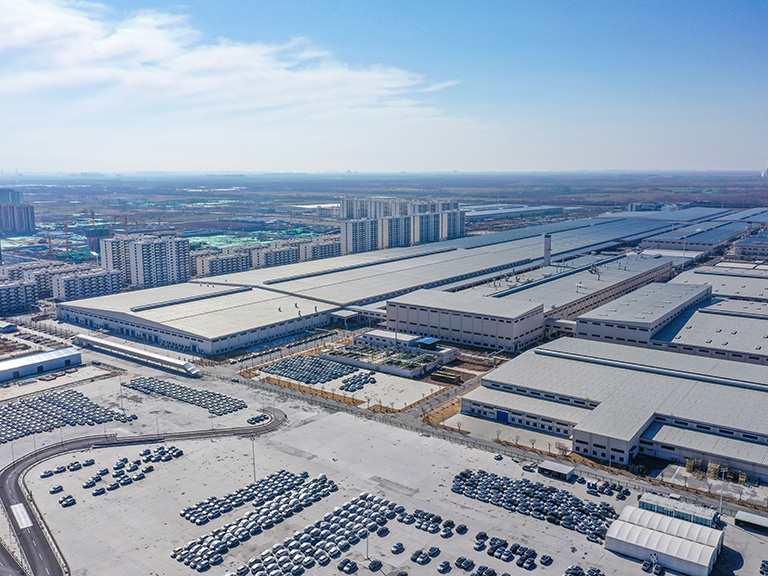
China accounted for about 47% of global cleantech exports, and around two-thirds of global solar and battery exports in 2025.
Source: BloombergNEF
Climate Tech Sustainability – Trends
Duration: 1:45
Speakers:
- Julian Wentzel, Group Chief Sustainability Officer, HSBC
LinkedIn (opens in new window) - Rob Genieser, Managing Partner, ETF Partners
LinkedIn (opens in new window) - Kim Zhou, CEO, Co-founder, Sightline Climate
LinkedIn (opens in new window)
[Julian]
Asia is the centre of the new climate tech revolution.
[Text on screen]
Julian Wentzel, Group Chief Sustainability Officer, HSBCChina is showing incredible capability around battery technology, solar, wind, transmission.
And we at HSBC believe we can play a unique role in catalysing capital to help these nascent technologies become scalable, at pace and effectively part of the new solution for the new energy system.
[Rob]
I think there’s a massive opportunity in climate tech investing today.
[Text on screen]
Rob Genieser, Managing Partner, ETF PartnersThe reason is simple. There are massive problems that need to be solved.
So, I think it’s a tremendous opportunity to work with China today because they are the leader in the world when it comes to creating climate tech related solutions.
If we look at all the industries that they’ve been helping to build, whether it’s from solar to electric cars to batteries, China has really taken a leading position in that.
[Kim]
[Text on screen]
Kim Zhou, CEO, Co-founder, Sightline ClimateI think we’re at a point in time in the energy and transition landscape where energy, security, affordability and sustainability is more important than ever.
We also work with HSBC to really bring awareness and convening into this space.
So, to bring the investors, the startups, the companies, the corporates all together, and I think it’s really HSBC’s global reach that stands out here.
[Julian]
We’re supporting new emerging technologies through a number of ways.
We also have a unique footprint. We have exposure to multiple technologies across multiple geographies.
And it’s about understanding what works, what doesn’t work and helping those new technologies come to fruition, get the oxygen, which is the capital we provide, and therefore hopefully globalise them over time.
[Text on screen]
HSBC | Opening up a world of opportunity
© HSBC Group 2026
Hear more on climate tech investment opportunityClimate Tech Sustainability – Trends
Duration: 1:45
Speakers:
- Julian Wentzel, Group Chief Sustainability Officer, HSBC
LinkedIn (opens in new window) - Rob Genieser, Managing Partner, ETF Partners
LinkedIn (opens in new window) - Kim Zhou, CEO, Co-founder, Sightline Climate
LinkedIn (opens in new window)
[Julian]
Asia is the centre of the new climate tech revolution.
[Text on screen]
Julian Wentzel, Group Chief Sustainability Officer, HSBCChina is showing incredible capability around battery technology, solar, wind, transmission.
And we at HSBC believe we can play a unique role in catalysing capital to help these nascent technologies become scalable, at pace and effectively part of the new solution for the new energy system.
[Rob]
I think there’s a massive opportunity in climate tech investing today.
[Text on screen]
Rob Genieser, Managing Partner, ETF PartnersThe reason is simple. There are massive problems that need to be solved.
So, I think it’s a tremendous opportunity to work with China today because they are the leader in the world when it comes to creating climate tech related solutions.
If we look at all the industries that they’ve been helping to build, whether it’s from solar to electric cars to batteries, China has really taken a leading position in that.
[Kim]
[Text on screen]
Kim Zhou, CEO, Co-founder, Sightline ClimateI think we’re at a point in time in the energy and transition landscape where energy, security, affordability and sustainability is more important than ever.
We also work with HSBC to really bring awareness and convening into this space.
So, to bring the investors, the startups, the companies, the corporates all together, and I think it’s really HSBC’s global reach that stands out here.
[Julian]
We’re supporting new emerging technologies through a number of ways.
We also have a unique footprint. We have exposure to multiple technologies across multiple geographies.
And it’s about understanding what works, what doesn’t work and helping those new technologies come to fruition, get the oxygen, which is the capital we provide, and therefore hopefully globalise them over time.
[Text on screen]
HSBC | Opening up a world of opportunity
© HSBC Group 2026
1 of 5 - Julian Wentzel, Group Chief Sustainability Officer, HSBC
-
Wealth

The ‘going global’ momentum in mainland China
“Entrepreneurs in mainland China remain extremely keen to diversify their businesses internationally. Going global is as strong as ever.”
Lok Yim, Regional Head, Asia-Pacific, HSBC Private Bank
69% of entrepreneurs in mainland China cite AI and advanced tech as the reason for their high levels of optimism, according to our data.
Explore more findings from HSBC Private Bank’s ‘Unleashing the Fire Horse: Mainland China’s Growing Global Imprint (opens in new window) ’ report.
1 of 4 -
Growth opportunities

The global economy is being rewired
In our survey, 72% of respondents anticipated moderate to significant repositioning of their businesses over the next three years, as they reassess where they operate and how they invest.
“Business leaders and institutional investors are recalibrating where they operate, invest and allocate capital.”
Michael Roberts, CEO, HSBC Bank plc, and CEO, Corporate and Institutional Banking, HSBC
Explore more findings from our ‘New Networks of Capital: The World Rewired (opens in new window) ’ report and find out more about our Global Investment Summit (opens in new window).
1 of 4 -
Growth opportunities
Energy storage: The fastest-growing cleantech
“Energy storage is a key energy transition enabler that will drive transformation across power systems, buildings and industry.”
Charles Swabey, HSBC Global Investment Research
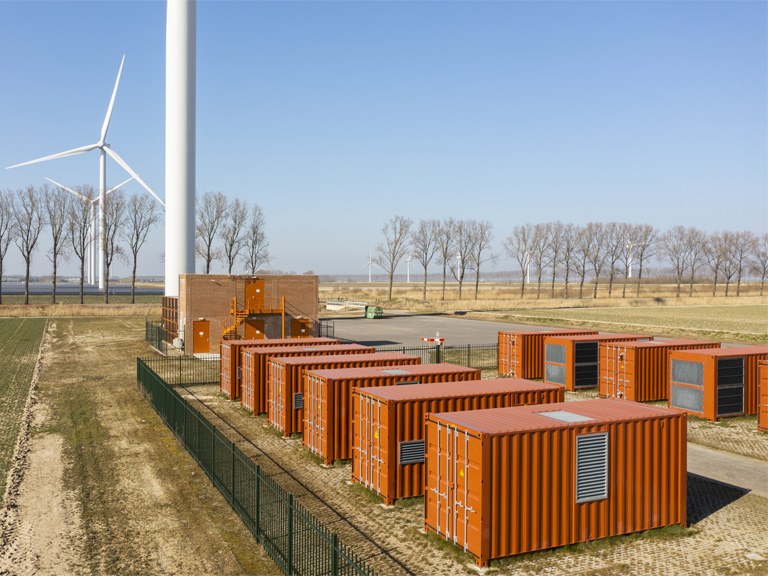
Global battery storage installations grew at a 66% compound annual rate from 2014-24 – around twice as fast as solar power installations – and capacity could quadruple by 2030, figures suggest.
Explore more findings from HSBC Global Investment Research’s ‘Energy storage: the great enabler (opens in new window) ’ report.
1 of 4 -
Embracing technology

How hyper-personalisation is transforming banking
“Hyper-personalisation is a global megatrend, driven by advancements in technology and consumer demand.”
Bojan Obradović, Group Head of Innovation and Digital Partnerships, HSBC
Hyper-Personalisation in Banking
Duration: 00:01:42
Speakers:
- Bojan Obradović, Group Head of Innovation and Digital Partnerships, HSBC
LinkedIn
[Text on screen]
Hyper-Personalisation in Banking: AI, Innovation and Trust
[Text on screen]
Bojan Obradović, Group Head of Innovation and Digital Partnerships, HSBC
[Bojan]
What I would say is that both digital banks, fintechs and large global banks, we all look at hyper-personalisation as one of the megatrends that we are strategically investing in, and that’s driven by essentially two things.
One is the advancements in technologies, artificial intelligence, predictive data analytics and capabilities to harness large amounts of data and essentially assess your customers, understand them better and offer better products and services.
The second reason is if you just think about our lives, think about what we’re exposed to, outside of banking.
You look at content delivery from YouTube and Netflix, it’s abundant and near-instant.
You look at social media, it’s abundant and near instant.
You look at e-commerce, products, service are abundant and near instant.
And in many places around the world you can order something online and get it within hours.
And what you see on there is just continuous attempts to offer you personalised services that really tap into your... based on their understanding, what you need at any given point in time.
And so all of us in our daily lives are now used to that environment are used to seeing this in everything that we do, and therefore that translates into our industry as well.
Financial services has to keep up with those trends, and therefore hyper-personalisation becomes critical to both whether you’re a digital bank or a large global bank.
[Text on screen]
HSBC | Opening up a world of opportunity
© HSBC Group 2026
HSBC Trends Hyper-PersonalisationHyper-Personalisation in BankingHyper-Personalisation in Banking
Duration: 00:01:42
Speakers:
- Bojan Obradović, Group Head of Innovation and Digital Partnerships, HSBC
LinkedIn
[Text on screen]
Hyper-Personalisation in Banking: AI, Innovation and Trust
[Text on screen]
Bojan Obradović, Group Head of Innovation and Digital Partnerships, HSBC
[Bojan]
What I would say is that both digital banks, fintechs and large global banks, we all look at hyper-personalisation as one of the megatrends that we are strategically investing in, and that’s driven by essentially two things.
One is the advancements in technologies, artificial intelligence, predictive data analytics and capabilities to harness large amounts of data and essentially assess your customers, understand them better and offer better products and services.
The second reason is if you just think about our lives, think about what we’re exposed to, outside of banking.
You look at content delivery from YouTube and Netflix, it’s abundant and near-instant.
You look at social media, it’s abundant and near instant.
You look at e-commerce, products, service are abundant and near instant.
And in many places around the world you can order something online and get it within hours.
And what you see on there is just continuous attempts to offer you personalised services that really tap into your... based on their understanding, what you need at any given point in time.
And so all of us in our daily lives are now used to that environment are used to seeing this in everything that we do, and therefore that translates into our industry as well.
Financial services has to keep up with those trends, and therefore hyper-personalisation becomes critical to both whether you’re a digital bank or a large global bank.
[Text on screen]
HSBC | Opening up a world of opportunity
© HSBC Group 2026
Read more from Bojan about why ‘Hyper-personalisation is critical for all banks’ and how we’re strategically investing in this megatrend.
1 of 5 - Bojan Obradović, Group Head of Innovation and Digital Partnerships, HSBC
-
Across the globe, wealth associated with art and collectibles could rise to US$2.86 trillion in 2026, up from US$2.17 trillion in 2022, according to Deloitte.
“The urge to collect art is driven by very different desires to those behind building a stock or bond portfolio and its ‘value’ can mean different things to different people and at different points in time.”
Russell Prior, HSBC Private Bank
The similarities between art and private marketsThe challenge of defining the value of art
Duration: 00:01:32
Speakers:
- Purvi Amin, Managing Director, Head of UHNW Solutions Group, UK, HSBC Private Bank
LinkedIn
[Text on screen]
Alya Hatta Briefly, not apart
[Purvi]
Investing in art is investing in private markets.
It’s a subset of the asset classes available, and therefore it shares a lot of the same characteristics.
It can provide diversification benefits and therefore diversified returns across a portfolio.
It can also help to establish a legacy and importantly, people invest in art because it’s a very personal investment.
[Text on screen]
Alvaro Barrington
Sea and Waves BY, 2022
[Purvi]
It can be driven by a passion, theme, or even the social impact of that artist.
When investing in a piece of art or investing in a private business, typically you’re buying into a story.
[Text on screen]
Phoebe Unwin
Large Garden
[Purvi]
You’re buying into the story of the artist, and what has driven them to create this piece.
And often the investor, when it comes to private market investing, sees this as more than a financial investment.
[Text on screen]
Xiao Wang
Portrait, October
[Purvi]
They can often see it as a quasi-strategic one where they can, if they’ve been successful in a particular sector, they can use that knowledge to help to drive that business further.
So, a lot of the time, these families that are investing are doing because they have a passion, they have an interest.
[Text on screen]
Emmanuel Awumi
Bethesda
[Purvi]
And I think when it comes to looking at art collections as well, you tend to notice that there’s some similarities across a collection that a family may have built up because of that knowledge base, and that interest in a particular style.
[Text on screen]
Alya Hatta
100 Kilos Uphill, Hour One & 100 Kilos Uphill, Hour Two
With thanks to the artists in the HSBC collection:
© Mohamed Ahmed Ibrahim. Courtesy the Artist and Lawrie Shabibi © Emmanuel Awumi. Courtesy the Artist
© Alvaro Barrington. Courtesy the Artist and Sadie Coles HQ, London
© Alya Hatta. Courtesy the Artist
© Mohammed Kazem. Courtesy the Artist and Gallery Isabelle, Dubai
© Jin Han Lee. Courtesy the Artist and Union Pacific
© Phoebe Unwin. Courtesy the Artist and Amanda Wilkinson Gallery
© Xiao Wang. Courtesy the Artist
© Vivien Zhang. Courtesy the Artist and Pilar CorriasHSBC Private Bank
Important notice. This is a marketing communication issued by HSBC Private Bank. HSBC Private Bank is the principal private bank business of the HSBC Group. Private Bank may be carried out internationally by different HSBC legal entities according to local services and regulatory requirements. This document does not constitute independent investment research under the European Markets in Financial Instruments Directive (‘MiFID’), or other relevant law or regulation, and is not subject to any prohibition on dealing ahead of its distribution. The information contained within this document is intended for general circulation to HSBC Private Bank clients. This document is for information purposes only and does not constitute and should not be construed as legal, tax or investment advice or a solicitation and/or recommendation of any kind from the Bank to you. Some HSBC Offices may act only as representatives of HSBC Private Bank and are therefore, not permitted to sell products and services or offer advice to customers. A complete list of private bank entities in available on our HSBC Private Bank website. Before proceeding, please refer to the full Disclaimer and the Terms and Conditions. ©Copyright HSBC 2025
© HSBC Group 2026
1 of 5 - Purvi Amin, Managing Director, Head of UHNW Solutions Group, UK, HSBC Private Bank
-
Growth opportunities

The advancing economic integration across ASEAN
“Despite the macro and geopolitical uncertainty, investors continue to be very constructive on ASEAN as a growth region.”
Gilbert Ng, Head of Banking, HSBC Singapore
Read our ‘Business Guide to ASEAN’ report (opens in new window) to learn more about how businesses can harness the new economy, sustainability and the ASEAN growth opportunity.
The state of the Southeast Asia consumer economy
Duration: 00:03:22
Speakers:
[Text on screen]
The state of the Southeast Asia consumer economy[Wong]
What is the state of play for Southeast Asia’s super app economy?
[Text on screen]Wong Kee Joo, Chief Executive Officer, HSBC Singapore
What are the opportunities for growth and what are the risks?
[Text on screen]
Peter Oey, Chief Financial Officer, Grab[Peter]
What we’re seeing in our business is that because the population is so huge, you’ve got to position the product in a way that it serves the masses.
That’s what we believe in.
So, we have been focusing a lot around affordability.
You’ve got to make the products affordable and accessible to the Southeast Asian market.
The demand is there but if you’re not pricing it right and if you’re not also positioning it right for the masses then you’re not really serving the Southeast Asian market.
So, what we’ve been doing in the last three years since coming out of COVID is really adding product breadth and depth into a stack itself, making it affordable so we can actually touch more lives in the Southeast Asian market.
At the same time, also, customers in Southeast Asia are very picky.
They’re very selective, they’re very price sensitive.
So, not only affordability is key, you’ve got to have reliability.
And I always say to my Grabbers also, it’s affordability, accessibility and reliability.
It’s really critical to the mix, especially in the business that we do because we touch so many lives in Southeast Asia.
So, now we have roughly about 46 million monthly transacting users on our platform today.
Roughly about 8 million Southeast Asians use our products on a daily basis.
And we feel that we’re just scratching the surface.
Southeast Asians still love to go out.
They love going to malls, they love to go to eat at restaurants.
So, how do you also make that experience also using the Grab platform.
So, we’ve added Dine Out for an example where you could use the Grab platform to look for restaurants, enjoy a meal with your family, but also we can help you get there.
We can help you look at the restaurant, select the menu.
We can get you home also all within...or you use GrabPay also to pay for that particular meal itself, which is more what the super app concept is really all about.
So, it’s really exciting for us to see all this.
Now, are there challenges in Southeast Asia?
Of course there are challenges.
Competition has always been very tough in Southeast Asia.
I was recently speaking to a very, very famous CEO in the US and he said, “Peter, you know, your market that you operate is one of the most competitive spaces that I’ve seen.”
And he’s right by saying that.
But also gives us the grit actually and the energy to actually... how to position the market and how do you find the niche spots that you can actually open up the tent at the same time.
We’re also observing what’s happening around the world economically.
What we’ve been noticing in Southeast Asia actually is that, from our lens perspective, if you make your products affordable, there is no slow down.
Like if you look at the numbers that I posted about a few weeks ago, we’ve seen growth acceleration in our business.
We’ve seen a 22% growth in most parts of our business; our fintech’s growing at 46%.
So, there’s a lot of growth also still.
Again, but it comes down to you got to make your products affordable, reliable and accessible.
[Text on screen]
Gilbert Ng, Head of Banking, HSBC Singapore[Gilbert]
Despite the broader macro and geopolitical uncertainty, investors continue to be very constructive on ASEAN as a growth region and in particular on high quality companies that have a clear and strong growth narrative like Grab.
[Text on screen]
HSBC | Opening up a world of opportunity
© HSBC Group 2026
HSBC Trends Grab SEA EconomyThe state of the Southeast Asia consumer economyThe state of the Southeast Asia consumer economy
Duration: 00:03:22
Speakers:
[Text on screen]
The state of the Southeast Asia consumer economy[Wong]
What is the state of play for Southeast Asia’s super app economy?
[Text on screen]Wong Kee Joo, Chief Executive Officer, HSBC Singapore
What are the opportunities for growth and what are the risks?
[Text on screen]
Peter Oey, Chief Financial Officer, Grab[Peter]
What we’re seeing in our business is that because the population is so huge, you’ve got to position the product in a way that it serves the masses.
That’s what we believe in.
So, we have been focusing a lot around affordability.
You’ve got to make the products affordable and accessible to the Southeast Asian market.
The demand is there but if you’re not pricing it right and if you’re not also positioning it right for the masses then you’re not really serving the Southeast Asian market.
So, what we’ve been doing in the last three years since coming out of COVID is really adding product breadth and depth into a stack itself, making it affordable so we can actually touch more lives in the Southeast Asian market.
At the same time, also, customers in Southeast Asia are very picky.
They’re very selective, they’re very price sensitive.
So, not only affordability is key, you’ve got to have reliability.
And I always say to my Grabbers also, it’s affordability, accessibility and reliability.
It’s really critical to the mix, especially in the business that we do because we touch so many lives in Southeast Asia.
So, now we have roughly about 46 million monthly transacting users on our platform today.
Roughly about 8 million Southeast Asians use our products on a daily basis.
And we feel that we’re just scratching the surface.
Southeast Asians still love to go out.
They love going to malls, they love to go to eat at restaurants.
So, how do you also make that experience also using the Grab platform.
So, we’ve added Dine Out for an example where you could use the Grab platform to look for restaurants, enjoy a meal with your family, but also we can help you get there.
We can help you look at the restaurant, select the menu.
We can get you home also all within...or you use GrabPay also to pay for that particular meal itself, which is more what the super app concept is really all about.
So, it’s really exciting for us to see all this.
Now, are there challenges in Southeast Asia?
Of course there are challenges.
Competition has always been very tough in Southeast Asia.
I was recently speaking to a very, very famous CEO in the US and he said, “Peter, you know, your market that you operate is one of the most competitive spaces that I’ve seen.”
And he’s right by saying that.
But also gives us the grit actually and the energy to actually... how to position the market and how do you find the niche spots that you can actually open up the tent at the same time.
We’re also observing what’s happening around the world economically.
What we’ve been noticing in Southeast Asia actually is that, from our lens perspective, if you make your products affordable, there is no slow down.
Like if you look at the numbers that I posted about a few weeks ago, we’ve seen growth acceleration in our business.
We’ve seen a 22% growth in most parts of our business; our fintech’s growing at 46%.
So, there’s a lot of growth also still.
Again, but it comes down to you got to make your products affordable, reliable and accessible.
[Text on screen]
Gilbert Ng, Head of Banking, HSBC Singapore[Gilbert]
Despite the broader macro and geopolitical uncertainty, investors continue to be very constructive on ASEAN as a growth region and in particular on high quality companies that have a clear and strong growth narrative like Grab.
[Text on screen]
HSBC | Opening up a world of opportunity
© HSBC Group 2026
1 of 5 -
Embracing technology
Financing the data centre boom
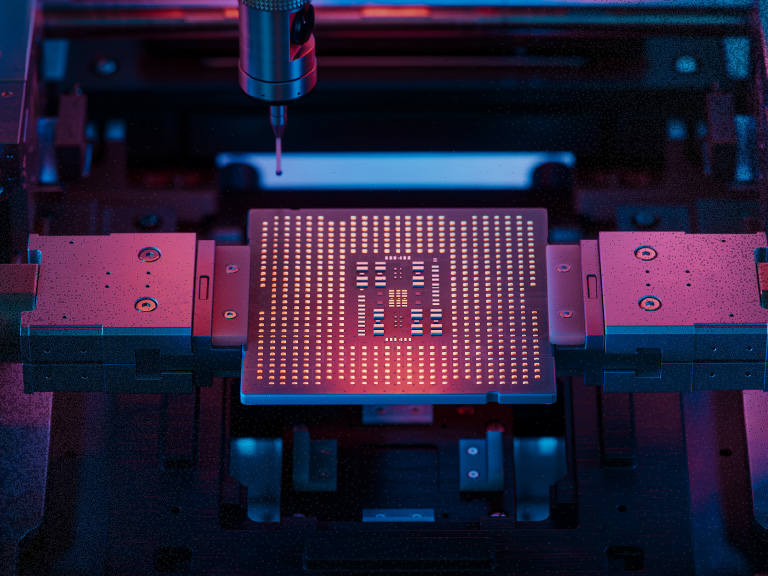
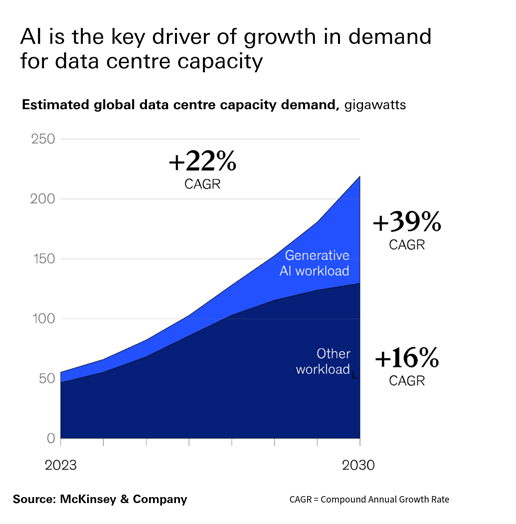
Millions of servers are running 24/7 to power the global AI data centre boom. McKinsey research suggests meeting this demand will require c.US$6.7 trillion in global capital expenditure by 2030.
The rapid growth of the data centre market
Duration: 00:02:49
Speakers:
[Text on screen]
The rapid growth of the data centre market
[Text on screen]
Jo Miyake, Head of Banking, Asia and Middle East, Corporate and Institutional Banking, HSBC[Jo]
So, we’re here to talk about data centres today, and there are a lot of new data centre innovations emerging all the time.
So, what’s on your radar for the next 12 to 18 months?
[Text on screen]
Prashant Murthy, Managing Director, Capital & Strategy, AirTrunk[Prashant]
The data centre industry is in a really interesting spot right now, where we’re seeing continued significant demand in front of us, really for cloud, but what’s really been interesting is the evolution of AI really in the last year and then how that’s actually translated.
So, for the data centre space, which in many ways, has really been a very simple singular product for a long time.
It’s been a certain type of air cooling, a certain type of power capacity, and really a shell that sits with it.
And now we’re really evolving into a new space of liquid-cooling and how GPUs fit into our ecosystem, how that actually translates into providing more AI products.
And so it’s in a really interesting spot where the outlook is still really strong on public cloud migration, especially in the Asia market where we concentrate, but also the introduction and adoption of new products in AI as well, which is also really exciting as we look forward.
[Jo]
But when you think about the financial sector and how we look at the data centre space, there’s this debate that rages.
Should we be thinking about it as a real estate play? It’s got the same economics of risk, maybe like an infrastructure play.
What’s the right way to think about it? Or even an AI play?
[Prashant]
What’s interesting is seeing how this has evolved over the last 10 years, and we’ve really seen the evolution of how the finance market has thought about these spaces.
As you exactly said, people have tried to approach it from each of those.
The reality is it’s all of those.
And I think what you’re starting to see is the understanding that this is practically its own asset class.
It is a set of real assets with long-term leases with high-quality counterparts sitting behind it.
The contracts themselves look like infrastructure contracts, as you said. You have high-quality counterparts, long tenures, escalation typically embedded. And there’s a huge growth element. We are fundamentally the backbone to AI.
And so there’s a strong linkage as we are the backbone to AI, we are the backbone of cloud.
As you see more cloud adoption, more AI adoption, you need the data centre space to be falling in line exactly with that.
And so there’s the growth tailwinds that are sitting behind all that as well.
And I think if I was to crystal ball, what you will start to see is dedicated teams to this space.
Not just even within digital infrastructure, but I think you’ll actually start to see the asset managers create data centre funds over time, at least digital infrastructure funds and the same for the banking sector, because I think you need to be quite dynamic in understanding all of those subsectors.
[Text on screen]
HSBC | Opening up a world of opportunity
© HSBC Group 2026
The rapid growth of the data centre marketThe rapid growth of the data centre marketThe rapid growth of the data centre market
Duration: 00:02:49
Speakers:
[Text on screen]
The rapid growth of the data centre market
[Text on screen]
Jo Miyake, Head of Banking, Asia and Middle East, Corporate and Institutional Banking, HSBC[Jo]
So, we’re here to talk about data centres today, and there are a lot of new data centre innovations emerging all the time.
So, what’s on your radar for the next 12 to 18 months?
[Text on screen]
Prashant Murthy, Managing Director, Capital & Strategy, AirTrunk[Prashant]
The data centre industry is in a really interesting spot right now, where we’re seeing continued significant demand in front of us, really for cloud, but what’s really been interesting is the evolution of AI really in the last year and then how that’s actually translated.
So, for the data centre space, which in many ways, has really been a very simple singular product for a long time.
It’s been a certain type of air cooling, a certain type of power capacity, and really a shell that sits with it.
And now we’re really evolving into a new space of liquid-cooling and how GPUs fit into our ecosystem, how that actually translates into providing more AI products.
And so it’s in a really interesting spot where the outlook is still really strong on public cloud migration, especially in the Asia market where we concentrate, but also the introduction and adoption of new products in AI as well, which is also really exciting as we look forward.
[Jo]
But when you think about the financial sector and how we look at the data centre space, there’s this debate that rages.
Should we be thinking about it as a real estate play? It’s got the same economics of risk, maybe like an infrastructure play.
What’s the right way to think about it? Or even an AI play?
[Prashant]
What’s interesting is seeing how this has evolved over the last 10 years, and we’ve really seen the evolution of how the finance market has thought about these spaces.
As you exactly said, people have tried to approach it from each of those.
The reality is it’s all of those.
And I think what you’re starting to see is the understanding that this is practically its own asset class.
It is a set of real assets with long-term leases with high-quality counterparts sitting behind it.
The contracts themselves look like infrastructure contracts, as you said. You have high-quality counterparts, long tenures, escalation typically embedded. And there’s a huge growth element. We are fundamentally the backbone to AI.
And so there’s a strong linkage as we are the backbone to AI, we are the backbone of cloud.
As you see more cloud adoption, more AI adoption, you need the data centre space to be falling in line exactly with that.
And so there’s the growth tailwinds that are sitting behind all that as well.
And I think if I was to crystal ball, what you will start to see is dedicated teams to this space.
Not just even within digital infrastructure, but I think you’ll actually start to see the asset managers create data centre funds over time, at least digital infrastructure funds and the same for the banking sector, because I think you need to be quite dynamic in understanding all of those subsectors.
[Text on screen]
HSBC | Opening up a world of opportunity
© HSBC Group 2026
1 of 5 -
Wealth

Family harmony through succession planning
“Family-owned businesses are particularly important in Asia, but entrepreneurs aren’t planning ahead to the same degree as counterparts elsewhere because it’s more complex.”
Lok Yim, HSBC Private Bank
78% of entrepreneurs would like to keep their business in the family to preserve its legacy – but 52% have no succession plan in place, according to our report.
Explore more findings from our ‘Harmony through succession planning (opens in new window) ’ report and read more from Lok about why Asia’s contrasting economic history and cultural dynamics may come into play.
1 of 4

Share
Did you find this page useful?
Why didn't you find this page useful?
Thank you. We appreciate you taking the time to give us feedback.