
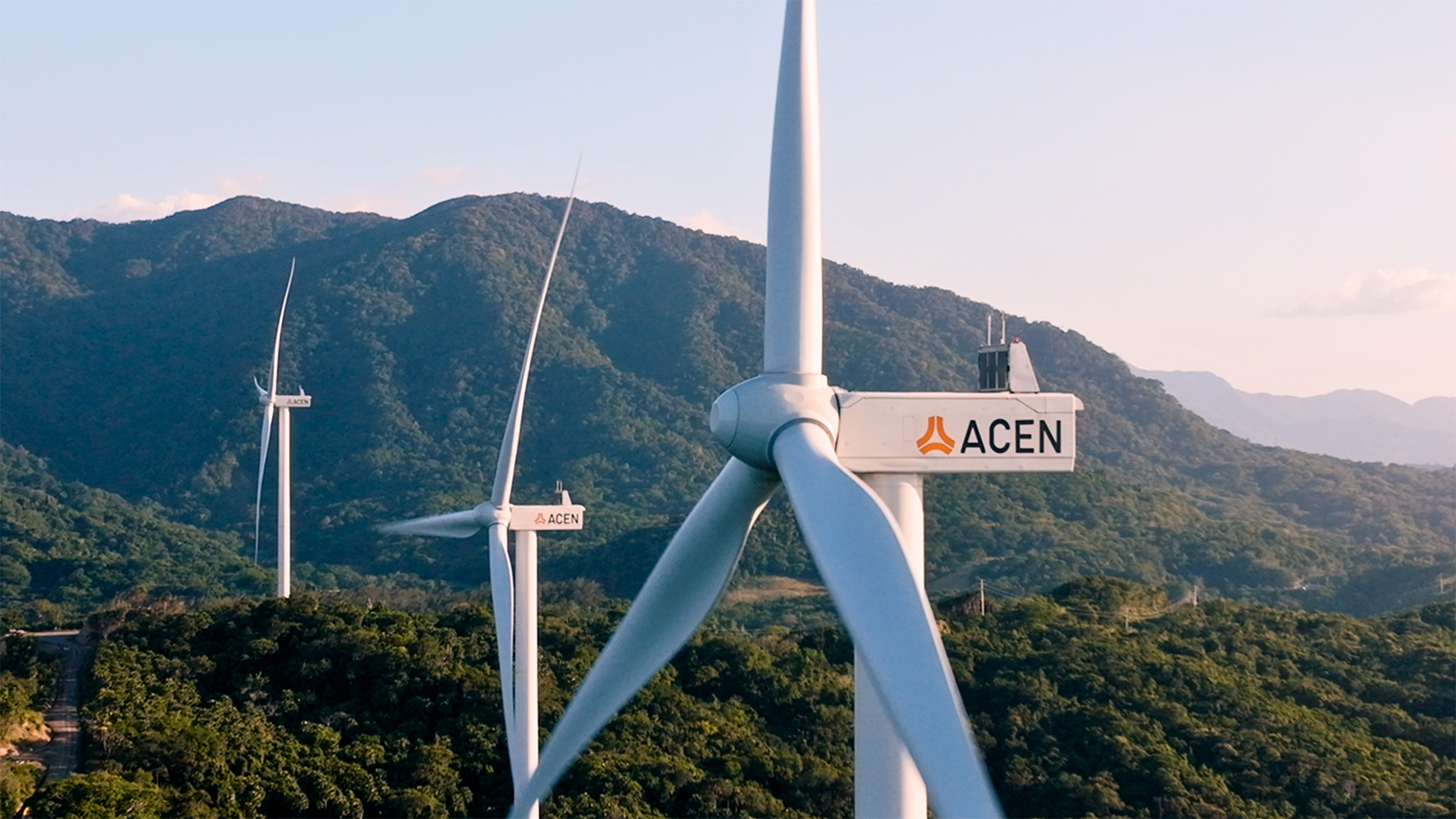
From fossil fuels to renewables – a transition story
In less than a decade, ACEN (opens in new window) (opens in new window) has transitioned from being a fossil fuels company to a renewables champion.
The growing urgency of climate change and the long-term risks associated with carbon-intensive assets inspired one of our clients – the energy subsidiary of Ayala Corporation (opens in new window) (opens in new window) (opens in new window) (opens in new window) in the Philippines – to decisively pivot away from thermal energy in 2016 and rapidly pursue renewables.
At a time when energy security is a hot topic, ACEN’s story is an example of what can be achieved by businesses finding the right partners to help them achieve their ambitions.
“Oil and gas shocks have brought energy security into sharp focus, prompting governments and businesses to rethink their dependence on imported energy,” said Justin Wu, Head of Sustainability and Climate Change, Asia-Pacific and Middle East.
Asia is particularly vulnerable as the region typically absorbs 80% of the Middle East’s exports.
“This is a defining moment to accelerate home-grown renewables – reducing exposure to volatile imports and building a more resilient, future-ready economy,” Justin added.
Revamping to renewables
ACEN began its transition in 2016 with only 73 MW of renewable energy capacity in the Philippines, or 2% of its entire portfolio.
In December 2025, ACEN announced it had achieved 100% renewable energy generation across its portfolio. It had transitioned from a 1 GW platform of mostly coal, oil and gas to 7 GW of renewable capacity, surpassing its target of 5 GW of renewable capacity by 2025.
“As we continue to scale our renewable energy portfolio across key markets, having a banking partner that provides integrated financing, risk management, and on-the-ground market expertise is critical,” said Eric Francia, CEO, ACEN.
Our financial solutions, instruments and facilities have been critical to securing power purchase agreements, grid connectivity, land, and enabling project construction, he said.
Sandeep Uppal, CEO and Head of Banking, HSBC Philippines, has worked closely with ACEN’s executives to meet their evolving needs.
“Partnering with ACEN was a natural extension of our 140-year relationship with Ayala Corporation - we have been complementing each other’s transition journey,” he said.
“Over the years, several of our specialist teams across our local and regional business have collaborated to provide a range of tailored financing to help ACEN develop its renewable energy portfolio at pace.”
Our client’s growing network of clean energy projects needed risk management solutions, particularly in foreign exchange and interest rate hedging. We delivered on long-term foreign currency project finance loans, offshore funding lines, and became one of the company’s main banking partners.
Expanding at pace
When ACEN first sought to expand internationally, Indonesia and Vietnam were natural entry points, given their supportive policy environments for renewable energy.
The company established platforms in Australia and India and made investments in other international markets with support from HSBC and other partners.
“HSBC’s international presence and understanding of local regulatory environments particularly in complex, emerging markets have been valuable to us,” said Eric.
“Access to USD financing enabled us to fund and scale renewable energy projects across multiple markets, at a time when building a diversified international portfolio was critical.”
ACEN’s expansion across multiple markets has led to greater investment in governance, risk management systems, leadership and technical capabilities across their business.
The company is focused on growth within the Philippines, Australia, and India, supported by a disciplined approach to capital allocation and execution. To this end, HSBC has provided project finance for solar projects in these countries.
Today, ACEN operates 24 solar power plants, 16 onshore wind projects, with strategic investments in geothermal energy and energy storage systems.
“HSBC’s combination of financing support and market insight has contributed meaningfully to our ability to expand internationally and accelerate our transition to renewable energy,” Eric added.


What’s next
Despite today’s volatile energy landscape, ACEN remains committed to scaling clean energy across its key markets in a disciplined and sustainable manner.
“We’re advancing opportunities in offshore wind in the Philippines together with Copenhagen Infrastructure Partners, alongside continued investments in emerging technologies such as floating solar and battery energy storage,” said Irene Maranan, Senior Vice President for Corporate Communications and Sustainability at ACEN.
“At the same time, we are strengthening our retail electricity supply business - not only to serve commercial and industrial customers, but with the longer-term ambition of supplying clean energy to households. This is an important step toward making renewable energy more accessible and relevant at the consumer level.”
“We value our partnership with HSBC, which continues to support our growth and our broader transition strategy,” she added.
Geopolitical developments and intensifying global energy demand are expected to accelerate the uptake of clean energy alternatives.
“Over the next decade, the world will need an enormous increase in clean electricity—driven by urbanisation, AI data centres and electric vehicles—especially in fast-growing Southeast Asia,” said Justin Wu.
“ACEN’s transformation from a thermal energy business to a renewables-only company shows what’s possible, and can inspire others to move faster.”
HSBC and Sustainability
We aim to become a net zero bank by 2050 by reducing our own emissions and supporting our customers to diversify and decarbonise.
Content last updated: 27 May 2026