
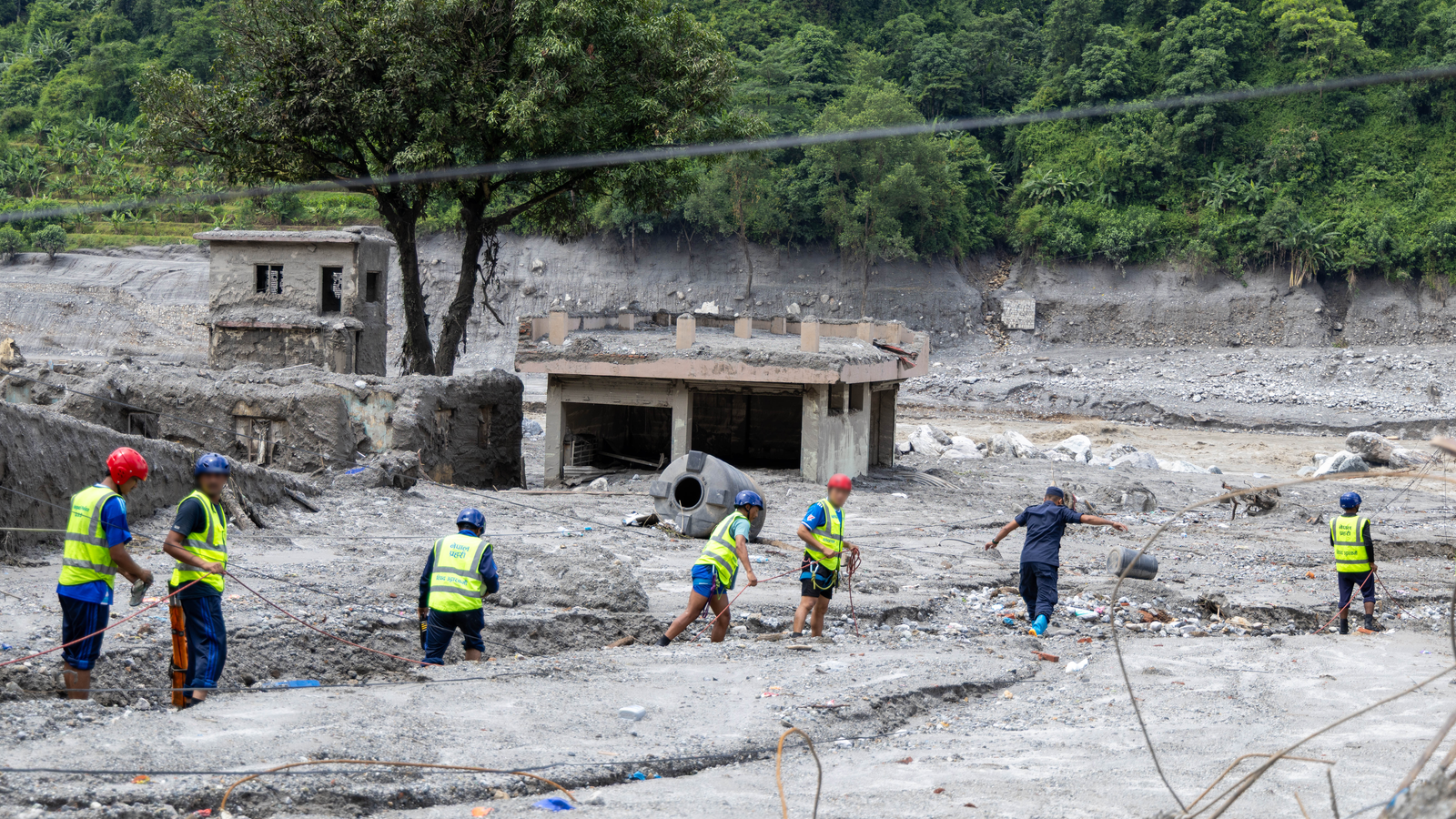
HSBC’s Disaster Relief Partnership launches
We’re partnering with UNICEF, the British Red Cross and Save the Children to launch HSBC’s Disaster Relief Partnership.
The 18-month partnership – backed by $4.5 million in funding from HSBC – will support these global humanitarian organisations to respond and provide relief rapidly when natural disasters occur.
It will also fund anticipatory action in communities at risk of natural disasters to help them prepare. Among other examples, this includes investing in warning systems and first-responder training.
“In an emergency, speed saves lives, and funding for disaster response has to keep pace,” said Pam Kaur, Group Chief Financial Officer, HSBC.
“As an international bank with deep roots around the world, HSBC cares deeply about getting support to communities as quickly as we can in the aftermath of a crisis.”
HSBC Disaster Relief Partnership
Duration: 00:01:49
Speakers:
- Sarah Barber
Global Head of Philanthropy and Partnerships, HSBC - Pam Kaur
Group Chief Financial Officer, HSBC - Moazzam Malik
CEO of Save the Children UK - Dr Philip Goodwin
CEO, UNICEF UK - Beatrice Butsana-Sita
CEO, British Red Cross
[Sarah]
We're excited today to announce HSBC’s new Disaster Relief Partnership, underpinned by $4.5 million.
[Text on screen]
Pam Kaur
Group Chief Financial Officer, HSBC
[Pam]
We believe effective support starts before disaster strikes.
Our partnership with UNICEF, the British Red Cross and Save the Children will help communities prepare, build resilience and recover faster.
[Sarah]
What makes this partnership distinctive is its focus on preparedness as well as response.
By dedicating 40% of funding to anticipatory action, we're supporting communities to better identify, mitigate and manage risks.
[Text on screen]
Moazzam Malik
CEO of Save the Children UK
[Moazzam]
By investing in flexible, pre-positioned support and anticipatory action, HSBC is helping unlock the value of acting earlier.
[Text on screen]
Dr Philip Goodwin
CEO, UNICEF UK
It’s about making sure that we’re pre-positioning supplies where they might be needed.
Making sure we’ve got the early warning systems in place.
[Moazzam]
HSBC’s support meant that around 30,000 people in Bangladesh did not experience the worst impacts of this entirely predictable crisis.
[Text on screen]
Beatrice Butsana-Sita
CEO, British Red Cross
[Beatrice]
Nature based solutions offer some of the most powerful and scalable tools, helping communities adapt and become more resilient.
[Philip]
Over 200 million children are facing humanitarian crises.
So making sure we have the funding in place allows us to use our network of 190 countries to respond to those children in a timely way.
[Sarah]
This partnership marks an important evolution in how HSBC supports communities affected by disasters.
By bringing together three leading humanitarian organisations, we can put funding to work more quickly and direct it to where it can have the greatest impact.
[Text on screen]
HSBC’s Disaster Relief Partnership
HSBC | unicef for every child | British RedCross | Save the Children
© HSBC Group 2026
The importance of being prepared
Extreme weather events are increasing in frequency – and every $1 invested in community-based disaster risk reduction can save an average of over $15 in averted future disaster recovery costs, according to UN analysis1.
“At a time when natural and humanitarian disasters are becoming more frequent and more intense, helping communities prepare for emergencies, and supporting them when they strike, has never been more crucial,” said Béatrice Butsana-Sita, Chief Executive Officer, British Red Cross.
“By supporting both preparedness and rapid emergency response, the partnership will ultimately help save lives and help build stronger, more resilient communities for the future.”
The power of collaboration
Learnings from the projects supported over the course of the partnership will be captured and shared.
“By bringing together HSBC’s commitment with the expertise of three leading humanitarian organisations, we have an opportunity not only to deliver practical support, but influence how the wider sector invests in preparedness, anticipatory action and faster humanitarian response,” said Moazzam Malik, CEO of Save the Children UK.
Dr. Philip Goodwin, Chief Executive, UNICEF UK, added: “In an increasingly volatile world, this year alone over 200 million children will urgently need support to survive ongoing global crises.
“Our partnership with HSBC strengthens our ability to act at speed – mobilising our vast global logistics supply chain to reach vulnerable children when every second counts.”
HSBC has been a longstanding provider of funding to UNICEF, the British Red Cross and Save the Children. Examples of recent relief efforts include support provided following the devastating floods in Nepal and Bangladesh, and earthquake in Colombia.
Notes
- United Nations Office for Disaster Risk Reduction, Global Assessment Report on Disaster Risk Reduction, 2025 (opens in new window) (opens in new window) (opens in new window).
- UNICEF does not endorse any company, brand, product or service.