
November newsletter

Our support following Hong Kong fire
We are implementing a series of emergency measures to support residents affected by the fire in Wang Fuk Court in Tai Po.
These measures aim to provide immediate financial and banking assistance, particularly for customers with missing identification or bank documents who may require cash or other services.
Together with Hang Seng Bank, we have also jointly pledged an initial donation of HK$30 million (US$3.9 million) to support urgent assistance and rehabilitation efforts for affected families and individuals.
Customer support
We will provide special handling for customers who cannot present their HKID, passbook, or ATM card for our banking services. We will also expedite the ATM, credit card and debit card replacement process for these customers.
We are increasing staffing at the two service outlets nearest to Wang Fuk Court:
- G/F & 2/F, 54-58 Kwong Fuk Road, Tai Po, New Territories
- 1/F, 54-58 Kwong Fuk Road, Tai Po, New Territories
Dedicated hotlines have also been established to provide assistance:
- HSBC Banking Services / HSBC Life Insurance: 2233 3066
- General Insurance Hotline (Operated by AXA): 2894 4676
In addition, HSBC Life will support affected individual life policyholders by providing fast-track and personalised claims handling as well as virtual mental health support.
Donating to relief efforts
Our initial donation with Hang Seng will aid disaster relief and rehabilitation efforts for those displaced by the fire.
“Our hearts go out to everyone affected by the devastating events in Tai Po,” said Peter Wong, Chairman of The Hongkong and Shanghai Banking Corporation Limited and The Hongkong Bank Foundation.
“Our immediate focus is on supporting the most vulnerable, and working closely with NGO partners to understand the urgent needs on the ground and deliver relief as swiftly and as effectively as possible.”
Edward Cheng, Chairman, Hang Seng Bank, added: “As a bank rooted in this community, Hang Seng is committed to supporting the community in times of need. Our thoughts are with all those affected, and we remain steadfast in our support for the community's recovery.”
Fraud vigilance
Customers are reminded to remain vigilant against fraud during this challenging time. If you receive a call from someone claiming to be from HSBC that causes you concern, verify the caller's identity by asking for their name and department. You can then confirm their identity by calling the official HSBC hotline. Do not provide sensitive information, such as passwords, over the phone.
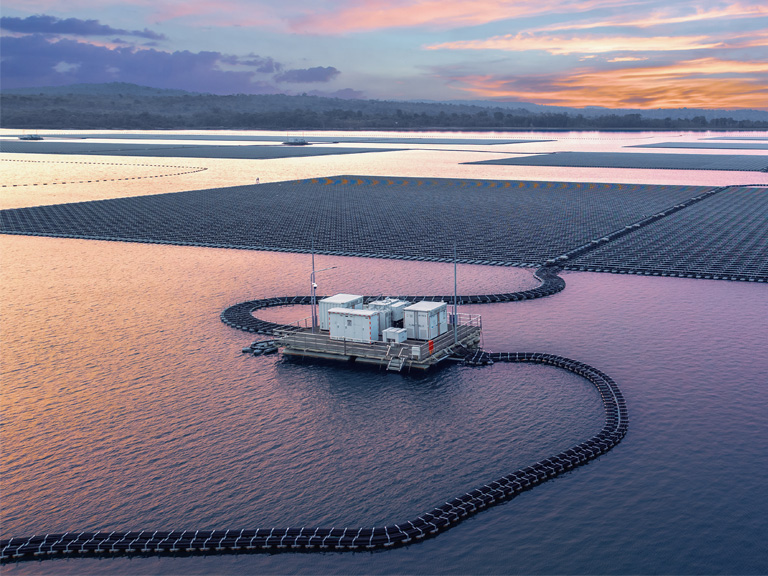
We’ve updated our Net Zero Transition Plan
We’ve published our updated Net Zero Transition Plan (NZTP), setting out an evolved, commercially grounded approach to helping customers succeed as the world moves towards a net zero economy.
Building on our inaugural NZTP published in January 2024, this updated plan reaffirms our ambition to become a net zero bank by 2050, while responding to a global landscape that has shifted markedly, making the pace of transition more uneven.
It’s informed by a deeper understanding of customer transitions, the latest scientific guidance, and the advantages of a simpler HSBC, better equipped to provide banking and investment solutions spanning sectors and value chains.
Progress to date
Since setting a net zero ambition in 2020, we’ve made progress across a number of areas. These include:
- Mobilising $54.1 billion in sustainable finance and investment in the first half of 2025 – a 19% year-on-year increase
- Providing and facilitating $447.7 billion in sustainable finance and investment since 2020, advancing towards our ambition to provide or facilitate $750 billion to $1 trillion by 2030
- Reducing by 30% our absolute on-balance sheet financed emissions (based on the baseline and progress numbers across target sectors reported in our Annual Report and Accounts 2024)
- Reducing by 76% our direct Scope 1 and 2 emissions (from a 2019 baseline)
Implementation pillars
The updated NZTP remains structured around three core implementation pillars: supporting our customers, embedding net zero into how we operate, and partnering for an enabling environment.
Building on these foundations, the updated plan intensifies our efforts to be:
- Customer focused: Further aligning our strengths, capabilities and capital to customers’ evolving transition needs
- Commercial: Pursuing with greater clarity the growing opportunities the transition affords our customers, shareholders, and the economies we serve
- Agile: Leveraging our simpler structure and responding pragmatically to a dynamic external environment
“Our updated Net Zero Transition Plan is driven by greater clarity about our customers’ specific transition needs and the significant, growing commercial opportunities the transition affords them, our shareholders and the economies we serve,” said Georges Elhedery, our Group CEO.
“With our new plan, we are putting HSBC’s strengths and simpler structure to work for our customers with even more intent: supporting today’s economy to decarbonise, and enabling innovation, growth, and significant opportunity in the new economy, while continuing to make progress towards our own net zero ambitions and targets.”
Explore more in our quick read.

World’s largest digital bond issued on HSBC Orion
The Hong Kong SAR Government has issued a multi-currency digital green bond that priced at HK$10 billion (US$1.3 billion) – and it used our digital assets platform to do it.
It’s the world’s largest digital bond to date and was denominated in four tranches of HKD, RMB, USD and EUR.
As well as providing our HSBC Orion platform for the issuance, we held roles including joint global coordinator, joint lead manager and joint bookrunner.
“This latest digital issuance on HSBC Orion saw world record size and increased participation from institutional investors, further showcasing the potential of distributed ledger technology to enhance liquidity in the bond market,” said David Liao, our Co-CEO, Asia and Middle East.
The transaction also marks the world’s first digital bond to integrate tokenised central bank money – in the form of e-CNY and e-HKD – in the settlement process.
Since 2024, HSBC Orion has supported a number of landmark digital bonds. These include the first digitally native bond issued by a private sector entity in Hong Kong, and the first digital bond to be dual-listed in Hong Kong and Macau.
HSBC Orion is the #1 platform globally for digital bond volume in 2025 to date.
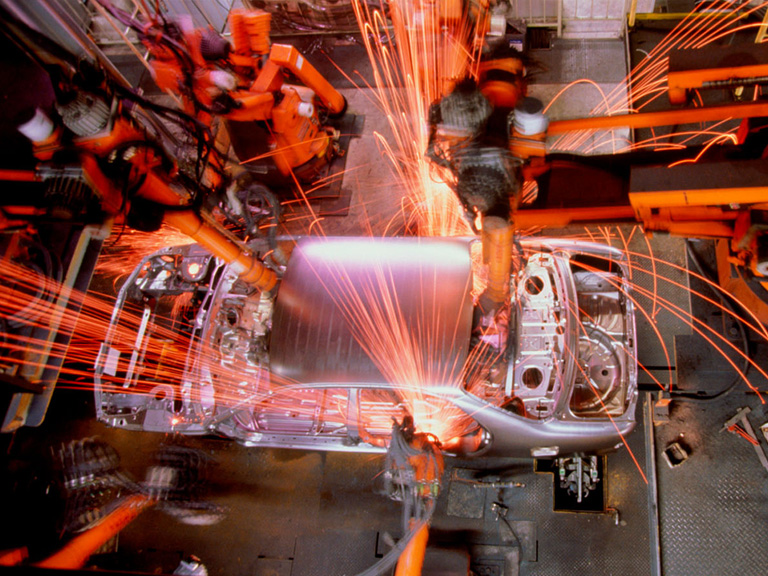
Global businesses adapting to trade uncertainty
Global businesses are settling into a steady state of constant adaptation as they navigate evolving trade and tariff headwinds, according to our latest Global Trade Pulse Survey.
Our second survey asked 6,750 decision-makers from 17 markets for their views on tariffs and trade.
More than eight in 10 businesses are focusing on diversification of supply chains to mitigate trade risks – and 67% feel more certain about how trade policy will impact their business than they did six months ago.
The survey also showed that:
- After a challenging first half of 2025, businesses are finding their footing and have more clarity on the trade and tariff landscape
- 50% plan to enter new markets
- 66% anticipate further cost increases over the next six months
- 77% say they can easily understand recent trade policy changes
Clarity and confidence
This growing sense of certainty is a crucial first step in enabling firms to make informed decisions and plan ahead, our report says.
As insight into the new trade landscape deepens, revenue concerns have eased markedly. Globally, 22% are worried about a negative impact on revenues of over 25% over the next two years as a result of supply chain disruption, down from 37% six months ago.
Most companies (53%) now expect revenues to increase in the next six months – and 58% over the next two years.
Market trends
Preparedness for trade regulations has emerged as a key driver of business adaptability, allowing companies to better respond to policy shifts and make strategy adjustments.
Businesses in the US feel most prepared for trade regulation shifts, with 52% of firms in this market feeling well informed and prepared, compared with 35% in Europe and just 32% in East and North Asia, the survey shows.
In addition to diversification, businesses are seeking new trade corridors to build resilience against instability.
Europe (40%) and Southeast Asia (36%) are the top destinations for expansion, followed by North America (32%) and East and North Asia (also 32%).
“Despite global negotiations and shifting tariffs, businesses appear to be settling into a steady state of constant adaptation,” said Vivek Ramachandran, our Head of Global Trade Solutions.
“Improved clarity over trade and tariffs has emboldened businesses to plan ahead, with many seeing international trade not as a risk, but as an opportunity to reinvent.”
Go deeper
Explore more findings from our Global Trade Pulse Survey (opens in new window).